Baklava tarifi: Antep usulü için kısa rehber
Baklava için Antep usulü yaklaşımda ince açılan yufkalar, bol fıstık ve dengeli şerbet öne çıkıyor. Geleneksel yapımda kullanılan malzemeler ve katman düzeni lezzeti belirliyor.
1 dk okuma
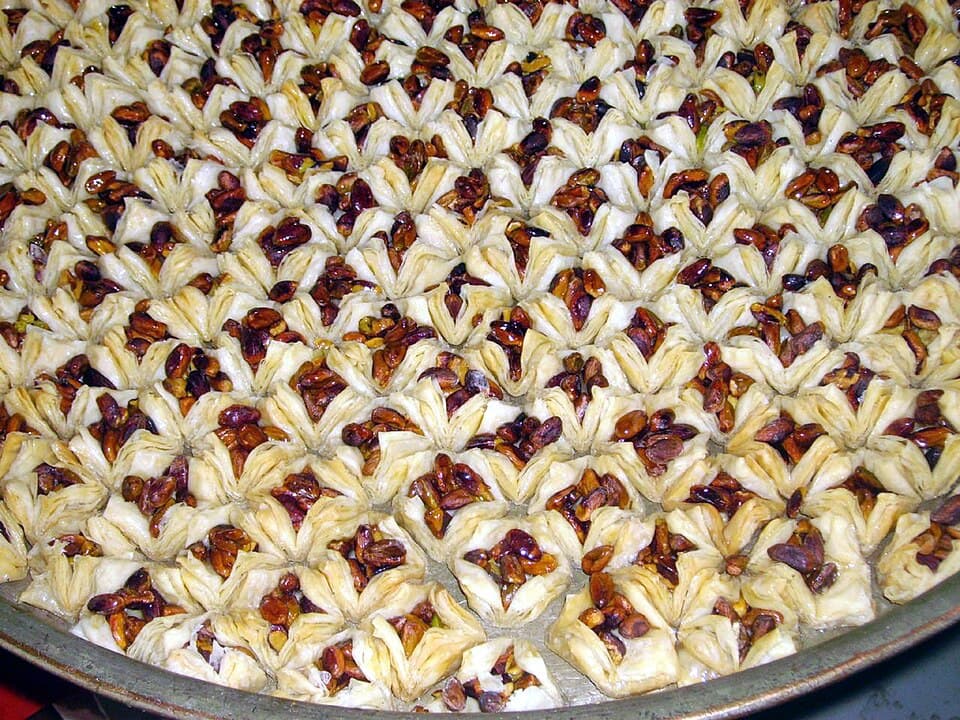
![Baklava shop, Damascus, Syria - 1 The history of baklava is not well documented. It has been claimed by many ethnic groups, but there is strong evidence that its current form was developed in the imperial kitchens of the Topkapı Palace based on a Central Asian Turkic tradition of layered breads. Many Ottoman sweets are similar to Byzantine, but rather a honey and ground sesame mixture similar to modern pasteli or halva. Perry assembles evidence to show that layered breads were created by Turkic peoples in Central Asia, and argues that the "missing link" between the Central Asian folded or layered breads (which did not include nuts) and modern phyllo-based pastries like baklava is the Azerbaijani dish Bakı pakhlavası, which involves layers of dough and nuts. The Uzbek pakhlava, puskal or yupka, and Tatar yoka, sweet and salty savories (boreks) prepared with 10-12 layers of dough, are other early examples of layered dough style in Turkic regions. The thin phyllo dough as used today was probably developed in the kitchens of the Topkapı Palace. The Sultan presented trays of baklava to the Janissaries every 15th of the month of Ramadan in a ceremonial procession called the Baklava Alayı. Other claims about baklava's origins include: that it dates back to ancient Mesopotamia, and was mentioned in a Aramean cookbook on walnut dishes; that al-Baghdadi describes something similar to it in his 13th-century cookbook; that it was a popular Byzantine dessert.[20] Claudia Roden finds no evidence for it in medieval Persian or Arab sources and suggests it arrived in the region during the Ottoman period. One of the oldest known recipes for a sort of proto-baklava is found in a Chinese cookbook written in 1330 under the Yuan (Mongol) dynasty under the name güllach. Güllaç is found in Turkish cuisine. Layers of phyllo dough are put one by one in warmed up milk with sugar. It is served with walnut and fresh pomegranate and generally eaten during Ramadan. A typical baklava, sweetened with syrup Local versions In Turkey, Gaziantep is famous for its pistachio baklava and regarded there as its native city,[citation needed] though it only appears to have been introduced to Gaziantep from Damascus in 1871. In 2008, the Turkish patent office registered a geographical indication for Antep Baklava. Baklava from Aleppo is made with the local pistachios and samna from Hama. In the Balkans, it is one of the most popular desserts; though, it is also a dessert made on special occasions (by Muslims, mostly during the holy month of Ramadan and Eid ul-Fitr) and by Christians during Pascha/Easter and Christmas. In Albania, baklava is a very popular dessert. The dough may include egg yolks,[dubious – discuss] and the filling uses walnuts. In Iran, a drier version of baklava is cooked and presented in smaller diamond-shaped cuts flavored with rose water. The city of Yazd is famous for its baklava, which is widely distributed in Iran. Persian baklava uses a combination of chopped almonds and pistachios spiced with cardamom and a rose water-scented syrup and is lighter than Middle Eastern versions. Pakhlava from Baku, Azerbaijan In Azerbaijan, pakhlava is mostly prepared during the Novruz festivity. After preparation the pakhlava is cut into diamond shapes and each piece is garnished with an almond or a walnut. In Afghanistan and Cyprus, baklava is prepared into triangle-shaped pieces and is lightly covered in crushed pistachio nuts. In Armenia, baklava is made with cinnamon and cloves. In Syria, baklava is prepared from phyllo dough sheets, butter, walnuts and sugar syrup. It is cut into lozenge pieces. Syria is considered the birth place of Baklava. In India, the desserts Gujiya and Balushahi are very similar to baklava in their preparation, taste, and texture. It is also served in other regions of the Indian Subcontinent such as the Punjab region in India and Pakistan, though it is not as popular as in other countries. In Greece, baklava is supposed to be made with 33 dough layers, referring to the years of Christ's life.](https://upload.wikimedia.org/wikipedia/commons/thumb/f/f2/Baklava_shop%2C_Damascus%2C_Syria_-_1.jpg/960px-Baklava_shop%2C_Damascus%2C_Syria_-_1.jpg)
Baklava, Türk ve çevre mutfaklarında yer etmiş, ince yufka katlarıyla hazırlanan bir hamur tatlısı olarak biliniyor. Yöresine göre ceviz, Antep fıstığı, badem ya da fındıkla yapılabiliyor.
Antep usulü baklavada en belirgin unsur, iç harçta Antep fıstığının kullanılması ve katların çok ince açılmasıdır. Tatlı genellikle şeker şerbetiyle tatlandırılıyor; bazı tariflerde bal şerbeti de tercih edilebiliyor.
Hazırlık sürecinde yufkaların tek tek açılması, aralarına yağ sürülmesi ve iç malzemenin dengeli dağıtılması önem taşıyor. Kat sayısı ve şerbetin kıvamı, son dokuyu doğrudan etkiliyor.
Baklava, yalnızca Türkiye’de değil Orta Doğu, Balkan ve Güney Asya mutfaklarında da karşılık bulan bir tatlı. Farklı bölgelerde kullanılan iç malzeme ve şerbet türü değişebiliyor.
Vikipedi’ye göre baklavanın Türkçe kökenli bir sözcük olduğu belirtiliyor. Aynı kaynak, kelimenin farklı dillere de geçtiğini aktarıyor.
Günümüzde baklava adı, farklı alanlarda da kullanılabiliyor. Android 16’nın takma adının Baklava olduğu da kaynak metinde yer alıyor.
Kaynaklar
Bu haber belirtilen kaynaklardan derlenerek özgün biçimde hazırlanmıştır.